
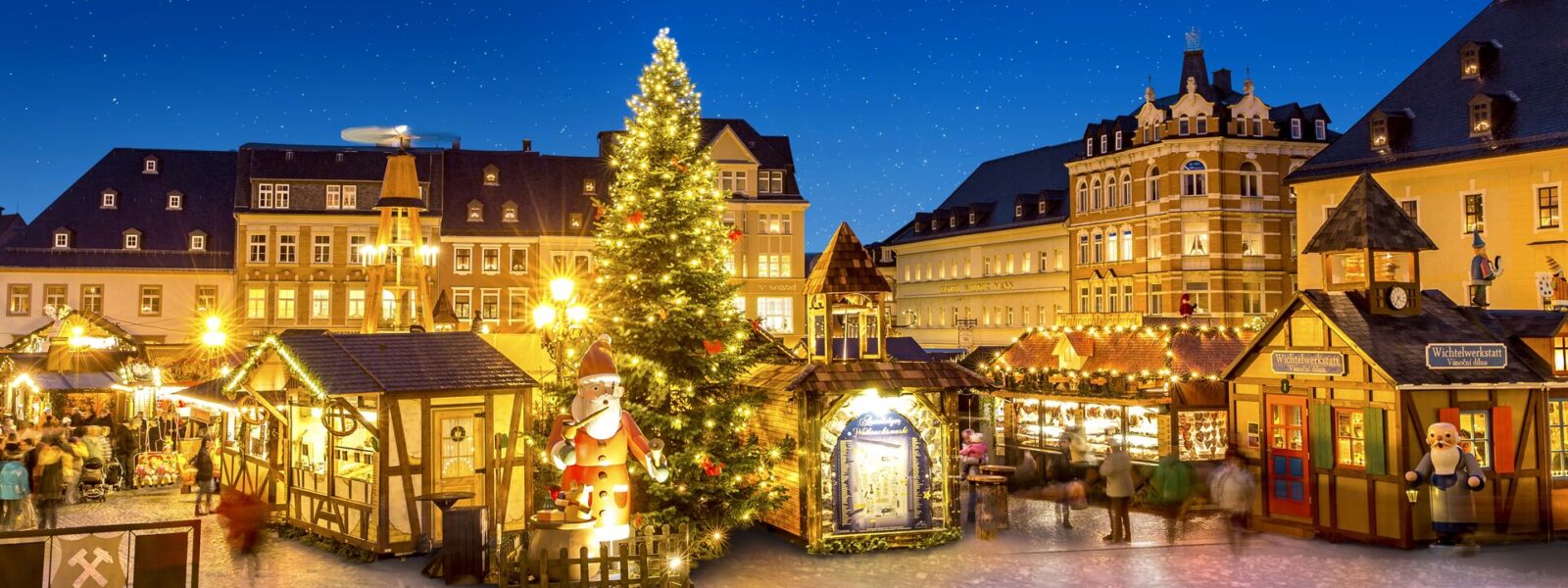
When winter arrives in Germany, the country transforms into a glowing tapestry of light, tradition and quiet wonder. Church towers rise above frosted rooftops, cobbled streets shimmer under golden lanterns, and the scent of cinnamon, roasted almonds, and mulled wine drifts through centuries-old town squares. Christmas markets appear everywhere—but not all of them are the same. Germany’s Christmas market tradition dates back to the late Middle Ages, with some of the most famous markets such as Nuremberg (Christkindlesmarkt) and Dresden (Striezelmarkt) among the oldest in the world, shaping the festive culture that has since spread across the country. Beyond these iconic cities lies another Germany. A quieter Germany. A more authentic Germany. A Germany where Christmas still feels deeply local, handcrafted, and untouched by mass tourism.
Ready to put your feet on the terrain of German Christmas markets? Ready to put your feeds on the terrain of German Christmas markets? Today we share 5 hidden Christmas markets in Germany off the beaten path – each one offering a different kind of winter magic.
Why Explore Off-the-Beaten-Path Christmas Markets in Germany?
Smaller Christmas markets feel more authentic because they are deeply rooted in local traditions rather than tourism. These markets reflect how Christmas is actually celebrated by locals, with handcrafted decorations, regional food and long-standing customs passed down through generations. They offer a genuine glimpse into the cultural heart of Germany’s winter traditions.
For everyone seeking more than just the well-known highlights, these places offer something increasingly rare in today’s world: space, authenticity, and meaningful connection to local culture and tradition. They invite you to slow down, explore beyond the crowds and experience Christmas as it is still lived in many regional corners of Germany. Instead of busy crowds like in Nuremberg or Dresden, visitors experience space, calm and a more intimate atmosphere where the lights, sounds and scents feel far more immersive and personal.
Each region in Germany has its own Christmas identity – shaped by landscape, history and tradition. From the Ore Mountains to Bavaria, from the Harz region to the Hanseatic North, every destination tells its own festive story. Off-the-beaten-path markets allow travellers to discover this diversity in its most authentic form: from wooden craftsmanship in Seiffen to Hanseatic elegance in Lübeck, from mining traditions in Annaberg-Buchholz to forest Christmas magic in Bavaria.
These places are not just destinations – they create emotional memories. Warm lights glowing in falling snow, quiet courtyards filled with music, forest paths illuminated by lanterns, and small-town squares wrapped in festive scents all come together to create moments that feel deeply personal rather than commercial. It is this emotional connection that stays long after the journey ends.
1: Annaberg-Buchholz – Christmas in the Ore Mountains
Annaberg-Buchholz, Saxony, Germany
Deep in the Ore Mountains (Erzgebirge), Annaberg-Buchholz reveals one of the most authentic Christmas experiences in Germany. This historic mining town is deeply rooted in craftsmanship and tradition. Wooden nutcrackers, incense smokers and delicate Erzgebirge decorations fill the streets with a sense of heritage that has been passed down for generations. At the heart of the market, the Marktpyramide slowly turns above the square, glowing softly as locals gather in the warmth of the festive lights. In Annaberg-Buchholz Christmas is not a performance, it is part of everyday life.
Why we love this Christmas market
It feels real, unpolished, and deeply traditional. It is the authentic heart of Germany’s Christmas traditions, where heritage, craftsmanship, and community come together in the most genuine way. Accompanied by the comforting taste of Stollen und Quarkkeulchen, shared in the glow of Christmas lights, Annaberg-Buchholz is Christmas as it has always been – lived, not staged.
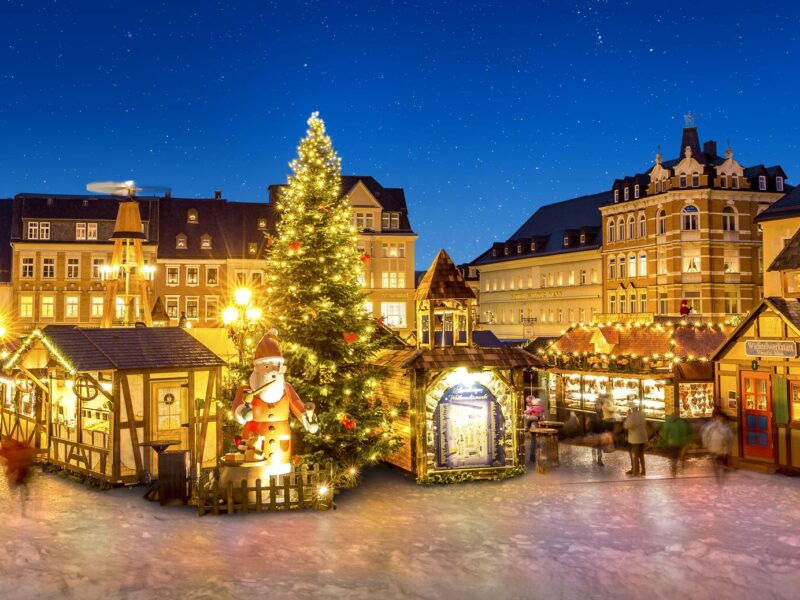
Christmas Market Annaberg-Buchholz, Germany © Dirk Rueckschloss/BUR
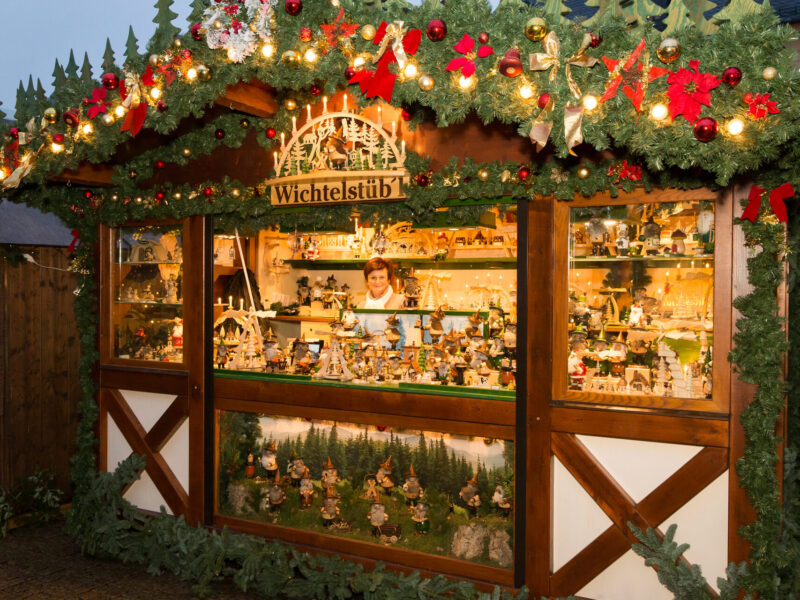
Christmas Market Stall Annaberg-Buchholz, Germany © Dirk Rueckschloss/BUR
2: Quedlinburg – A Fairytale of Hidden Courtyards
Quedlinburg, Saxony-Anhalt, Germany
In the Harz Mountains, Quedlinburg, a UNESCO World Heritage Site, feels like stepping into another century. More than 1,000 half-timbered houses create one of the most atmospheric Christmas settings in Europe. Narrow lanes lead through glowing streets, where small market stalls offer handmade crafts and regional delicacies.
The true magic lies behind closed doors. The famous “Advent in den Höfen” opens private courtyards, revealing hidden festive worlds behind historic . Hidden spaces fill with candlelight, music and festive warmth, creating a Christmas atmosphere that feels almost secret and deeply enchanting.
Why we love this Christmas market
It feels like discovery. Every courtyard is a moment of surprise, every corner a quiet piece of winter magic. Paired with regional specialties such as Harzer Baumkuchen and warm seasonal treats from local bakeries, Quedlinburg becomes not only a visual experience but also a taste of authentic Saxon-Anhalt tradition.
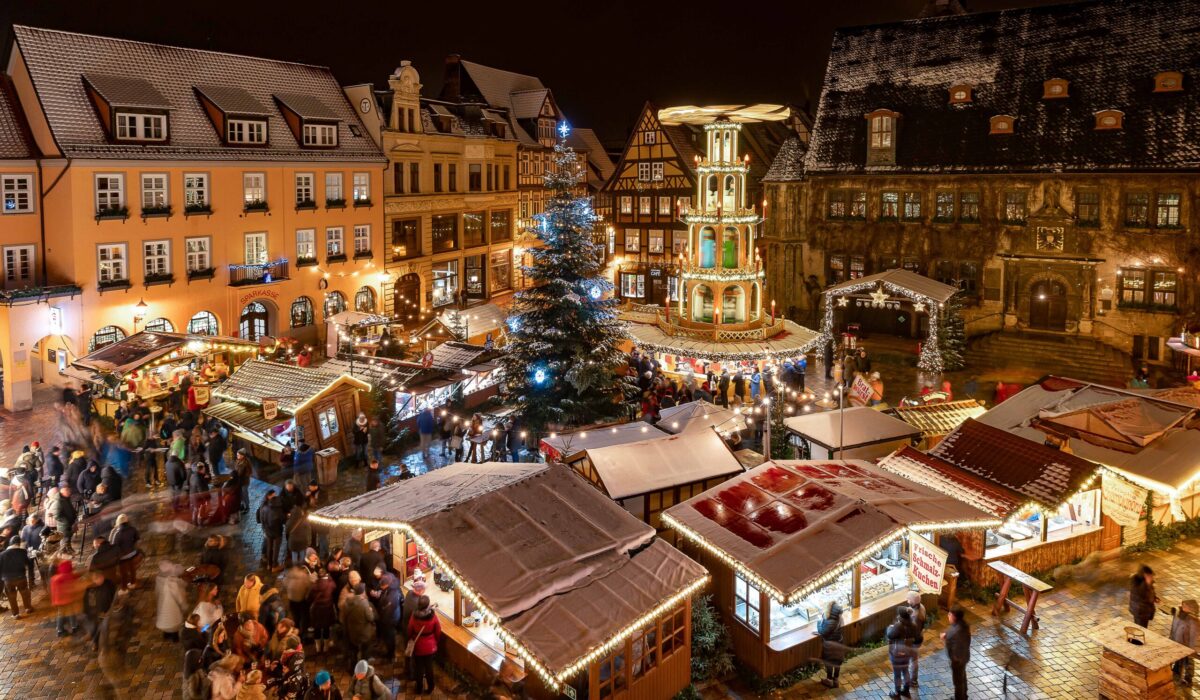
Quedlinburg – Germany’s Historic Advent Town © Andrea Fleischmann
3: Seiffen – The Living Heart of Christmas Craftsmanship
Seiffen, Saxony, Germany
Deep in the Ore Mountains lies Seiffen, a village where Christmas is not just celebrated, but created. This is the historic centre of Germany’s wooden toy industry, a place where craftsmanship is not a tradition of the past, but a living part of everyday life. Wooden toys from Seiffen have delighted both children and adults for generations, carrying the spirit of Erzgebirge artistry far beyond the mountains. Nutcrackers stand in windows like guardians of heritage, Christmas pyramids turn gently with candlelight and every workshop tells a story of skill passed down through families over centuries. The village is filled with handcrafted seasonal decorations from the region – arched light pyramids (Schwibbögen), incense smokers (Räuchermännchen) and intricately carved wooden ornaments that define the Erzgebirge Christmas identity.
During Advent, the Seiffener Weihnacht fills the village with music, tradition and a strong sense of community. One of the most atmospheric highlights is the traditional Bergmannsumzug, where miners in historic uniforms – led by the Steiger -parade through the village, honouring the region’s deep mining heritage. This solemn yet powerful tradition connects Seiffen’s Christmas celebrations to its industrial past in the Ore Mountains. Warm lights, the scent of mulled wine, Feuerzangenbowle and regional specialties such as Klitscher, together with the gentle rhythm of local life, create an atmosphere that feels deeply personal.
Why we love this Christmas market
Seiffen is the true centre of Germany’s wooden Christmas tradition, where craftsmanship, heritage and living cultural rituals come together. From hand-carved ornaments to the emotional presence of the Bergmannsumzüge, Christmas here is not performed, it is inherited, shared and deeply felt.
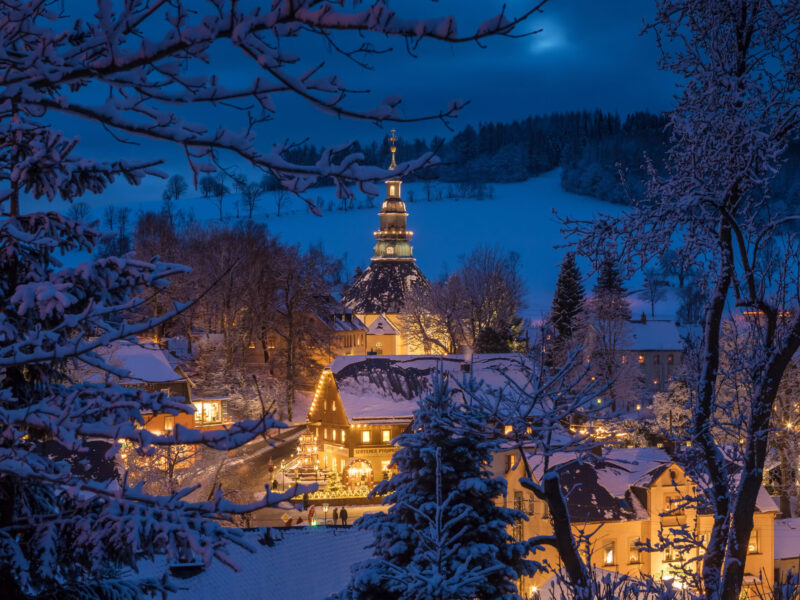
Kurort Seiffen, Germany © Tourismusverband Erzgebirge_Uwe Meinhold
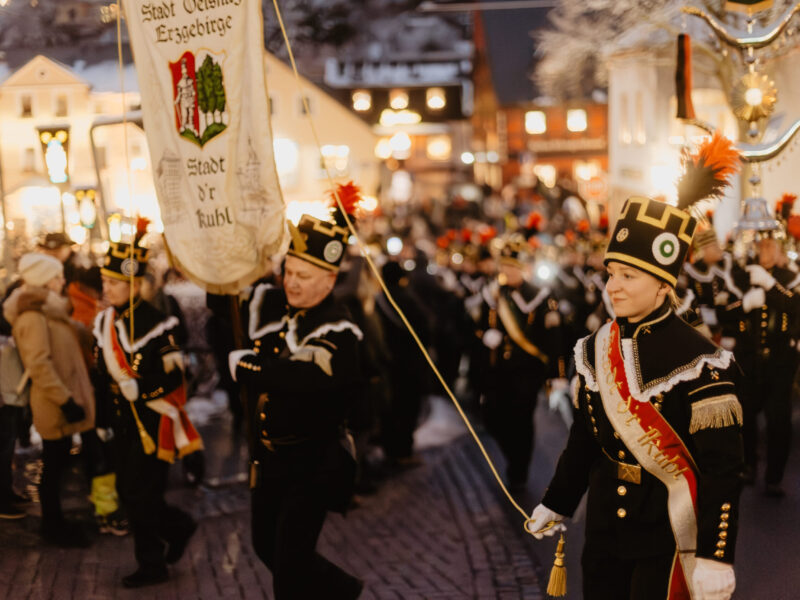
Bergparade Seiffen, Germany © Tourismusverband Erzgebirge_Anna Schalling
4: Lübeck – The Elegant Glow of the Hanseatic North
Lübeck, Schleswig-Holstein, Germany
In northern Germany, Lübeck carries the quiet elegance of its Hanseatic past. This UNESCO World Heritage city has hosted Christmas traditions for centuries and its old town still reflects that heritage today. Once one of the most powerful trading cities of the Hanseatic League, Lübeck flourished as a major centre of commerce between the Baltic and North Sea regions. This rich mercantile history is still visible in its Gothic brick architecture, merchant houses and grand church towers. Gothic brick churches rise above softly lit streets, while historic squares come alive with festive charm.
First mentioned in the 17th century, the Lübeck Christmas market carries centuries of tradition rooted in this Hanseatic trading heritage. Today, it unfolds across the historic centre – from traditional market squares to craft-focused stalls, medieval-inspired sections and even riverside winter scenes along the Trave. Lübeck is also world-famous for its marzipan – sweet, iconic and deeply connected to the city’s identity.
Here, Christmas feels refined, historic and beautifully balanced between tradition and sophistication.
Why we love this Christmas market
It combines history and elegance in a way few places can. Lübeck feels timeless yet alive, where glowing streets, Hanseatic heritage and the taste of marzipan come together to create a Christmas atmosphere that is both deeply cultural and effortlessly enchanting.
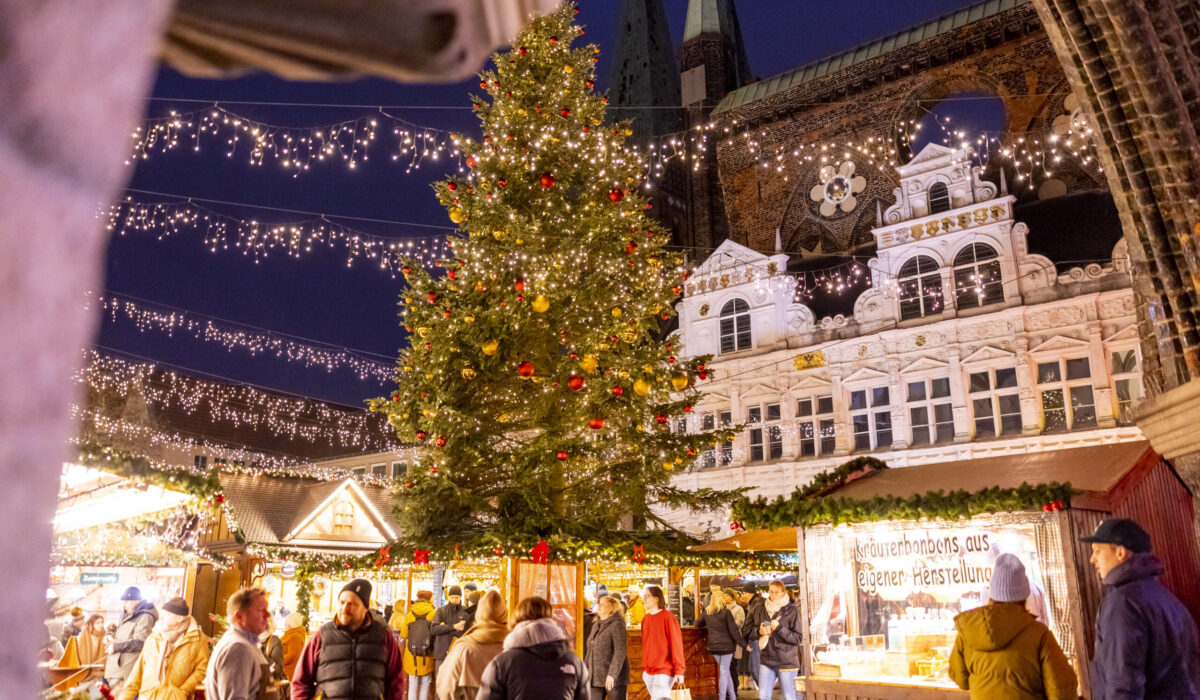
Christmas Market Lübeck on the market square © LTM
5: Waldwipfelweg & Sankt Englmar – A Forest of Christmas Lights and Winter Magic
Sankt Englmar, Bavaria, Germany
In the Bavarian Forest lies a Christmas experience where nature itself becomes part of the celebration. The Waldwipfelweg, a treetop walkway opened in 2009, winds above the forest canopy, offering panoramic views of snow-covered trees, silent valleys and a winter landscape that feels untouched by time. Here, Christmas is not confined to streets and squares but unfolds high above the ground, where light, silence and nature blend into one atmosphere. In nearby Sankt Englmar, the Christmas market at the Waldwipfelweg transforms the forest into a glowing winter world. Wooden stalls stretch between trees and along elevated paths, wrapped in warm lights that shimmer through the branches. The scent of pine fills the air, while regional specialties such as Sengzelten are served, bringing a taste of authentic Bavarian winter tradition to this unique setting.
Glühwein or punch enjoyed among illuminated treetops becomes a defining moment of the experience. This romantic forest Christmas market, partly set above the canopy, feels almost dreamlike – not only for children, but for anyone seeking something truly different. On Advent weekends, both St. Nicholas and, shortly before Christmas, the Christ Child appear, adding a deeply traditional and family-oriented touch to the atmosphere.
Warm lights, the scent of mulled wine and regional food, together with the gentle rhythm of the Bavarian Forest, create an atmosphere that feels deeply personal and unique.
Why we love this Christmas market
Waldwipfelweg & Sankt Englmar is where Christmas meets nature in its purest form. Above the treetops, light and silence merge into a magical winter landscape, while traditional Bavarian customs and regional flavours keep the experience grounded in authenticity.
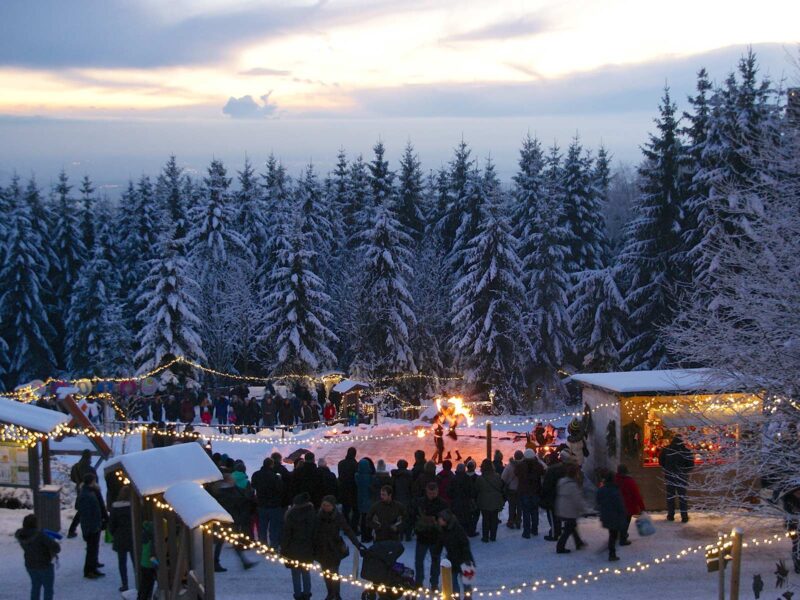
Winter World Waldwipfelweg in Maibrunn, Sankt Englmar, Germany © Waldwipfelweg GmbH
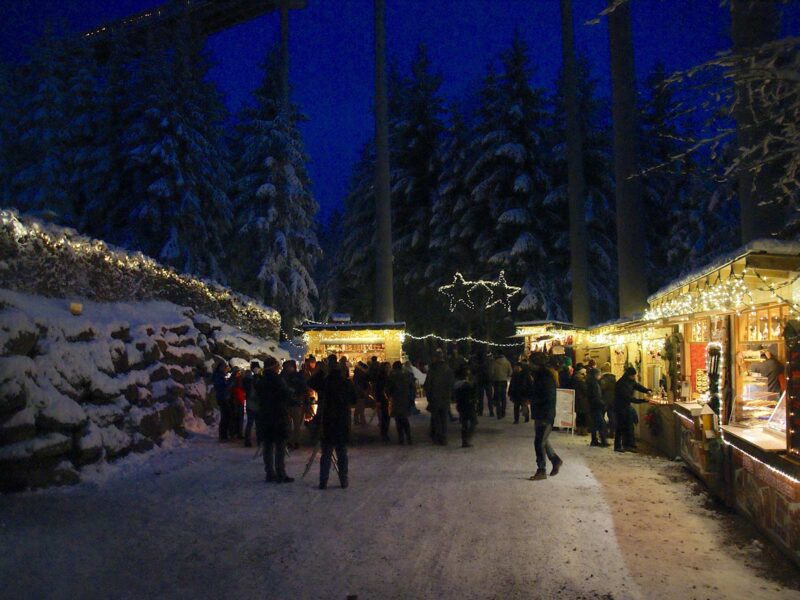
Christmas Market Waldwipfelweg, Maibrunn – Sankt Englmar (Bavarian Forest, Germany) © Waldwipfelweg GmbH
Fazit: The magic of discovering Germany’s hidden Christmas markets
As you can see, Germany’s Christmas markets are far more than just festive destinations – they are living traditions shaped by history, craftsmanship and local culture. Some places you visit once and never forget. Others invite you to return again and again, each time revealing a slightly different layer of winter magic. From UNESCO-listed old towns to remote mountain villages and glowing forest markets, it is the combination of experiences that makes the journey truly special. Not one single place, but the diversity of them all—the quiet moments, the shared traditions, the small details that stay with you long after you return home. Once you begin exploring beyond the well-known cities, you will realise: the real beauty of Christmas in Germany is not only in the famous markets, but in the hidden ones waiting to be discovered.
Wishing you joy, inspiration and many magical winter journeys as you explore them for yourself.
Keen to experience Germany’s Christmas markets off the beaten path for yourself?
Get your guide: “3 Costly Trip Planning Mistakes (and How to Avoid Them)” and learn how to plan your journey the smart way – avoiding common pitfalls, saving money and time. We share practical ideas and easy-to-implement strategies to help you avoid common trip planning mistakes and create a European journey that truly reflects your travel style and interests.
GOOD TO KNOW
Why less is more – the magic of small Christmas markets
Many travellers today are consciously seeking quieter, more authentic experiences. Small Christmas markets in places such as Seiffen, Quedlinburg, or Annaberg-Buchholz show that less is often more: more atmosphere, a closer connection to tradition, and more space to truly feel and absorb the special moments.
Opening Times of Christmas Markets in Germany
Most Christmas markets in Germany open in the final week of November and run until 23rd or 24th December, just before Christmas Eve. Smaller and more traditional markets may have slightly different schedules, often focusing on Advent weekends only, which adds to their intimate and local character. It is always worth checking individual dates in advance, as each town and region celebrates Christmas in its own unique way, shaped by centuries of tradition and local customs.
What to Wear – How to Dress for German Christmas Markets
Winter in Germany can be cold, especially in the evenings when temperatures often drop below freezing. Warm, layered clothing is essential. Think thermal layers, a good winter coat, gloves, scarf and a hat. Comfortable, waterproof winter shoes are highly recommended, as many Christmas markets are set on cobbled streets that can become icy or wet. The key is warmth and comfort – so you can fully enjoy the atmosphere, the lights and the festive food without feeling the cold.
A Winter Fairytale for the Whole Family
Many hidden Christmas markets in Germany are especially well suited for families. Markets like Seiffen or Sankt Englmar offer a warm, welcoming atmosphere where children can experience Christmas traditions up close, from handcrafted wooden toys and festive decorations to small seasonal activities. A calmer environment for children and a closer connection to tradition where visits from St. Nicholas or the Christ Child feel personal and memorable rather than staged.
Dreaming of your own Christmas Market journey through Germany, Austria or Switzerland?
Careful planning, local expertise and the right advice can make all the difference.
3 Costly Trip Planning Mistakes (and How to Avoid Them) $0 AUD): Dreaming of Europe, but not sure where to start? Too many destinations, too much information, and countless decisions to make? A successful European journey starts long before you board the plane. Avoid common planning mistakes that can cost time, money and valuable travel experiences. In this free guide, you’ll discover three costly trip planning mistakes many travellers make—and practical ways to avoid them. Create a smarter, more personalised Europe journey that truly reflects your interests, travel style and dreams. Download your free guide today.
$0 AUD Private Video Session: From Travel Ideas to a Clear Central Europe Journey. You have plenty of travel ideas, but turning them into a well-planned itinerary feels overwhelming? Wondering how to connect destinations, how long to stay, what route makes sense and in what order to plan it all? Ideally with as little stress, time and second-guessing as possible? In our complimentary 45-minute video consultation, we help you bring clarity to the planning process. Together, we explore ideas, share local insights, discuss possibilities and help you create a journey that feels seamless, personalised and truly your own. Secure your complimentary video session and take the first step towards your Central Europe adventure.
Private, tailor-made journeys to Germany, Austria, Switzerland & Liechtenstein. Europe . Your Way .