
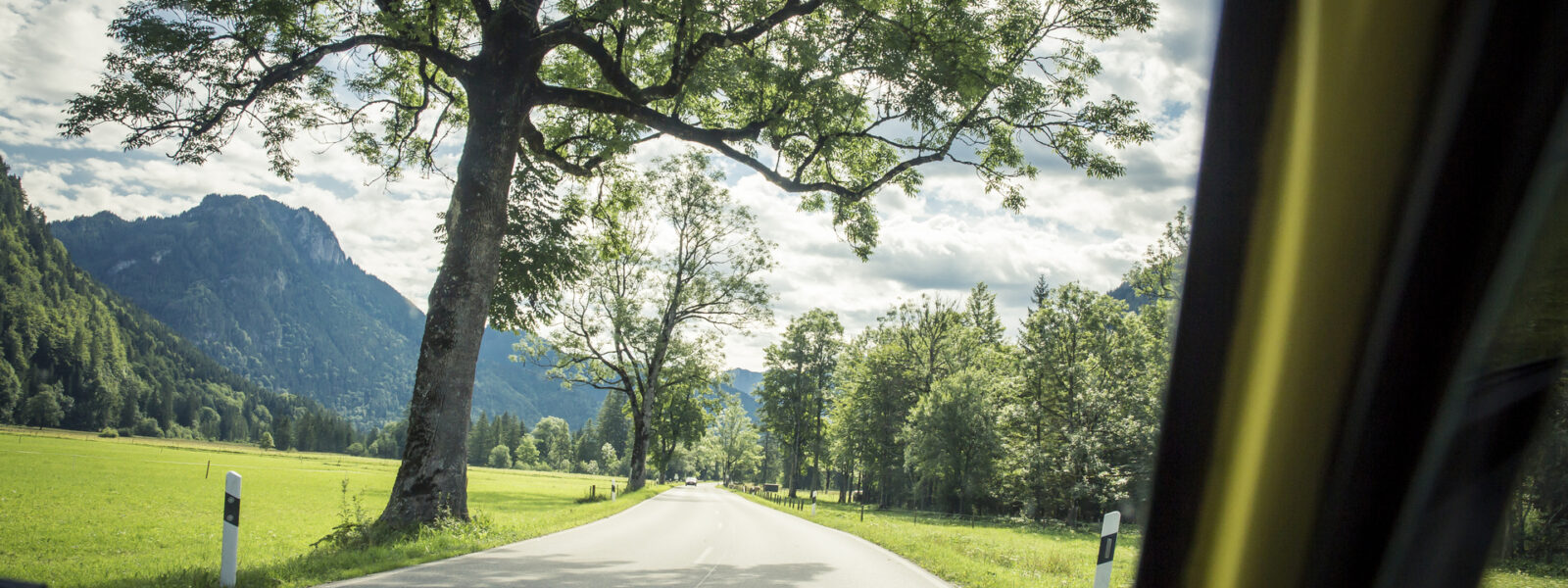
What is the German Alpine Road and why is it worth visiting on a trip to Bavaria? The German Alpine Road, or Deutsche Alpenstrasse, is a spectacular route through southern Bavaria, stretching for around 484 kilometres between Lindau on Lake Constance and Schönau am Königssee. It winds through the Bavarian Alps, passing mountain lakes, traditional villages, historic castles, green Alpine meadows and some of the most beautiful mountain landscapes in Germany. For Australian travellers, it may sound like the perfect European road trip, but the German Alpine Road is much more than a route to be driven from beginning to end. The real appeal lies in the places along the way and the freedom to slow down, explore, stay a little longer and experiencing authentic Bavaria. Read on to discover just some of the highlights, hidden gems and local experiences that make the German Alpine Road such a memorable journey through Bavaria, with so much more to explore along the way.
1: A Short History of the German Alpine Road – Germany’s Oldest Scenic Tourist Route
The idea of travelling through the Bavarian Alps for pleasure is not new. The route that would eventually become known as the German Alpine Road has its roots in the 19th century, when the landscape was already attracting travellers looking to experience the mountains and scenery of southern Bavaria.
The route was first mentioned in 1879, in an account of a journey undertaken by King Maximilian II in 1858. His journey through the Bavarian Alps reflected a growing fascination with the region and its dramatic landscapes at a time when travelling through the mountains was still very much an adventure. By the end of the 1920s, the idea of making these landscapes more accessible to travellers was gaining momentum. A renowned local doctor from Prien am Chiemsee, Dr Knorz, put forward the idea of creating a road that would allow the travelling public to experience and enjoy the extraordinary beauty of the Bavarian Alpine region.
In 1932, the German Touring Club developed plans for the infrastructure of what would become the German Alpine Road. In 1933, after the Nazis took up the idea, the expansion of the German Alpine Road was declared a major infrastructure project. The Bavarian government commissioned plans for a continuous German Alpine Road connecting Lake Constance with Berchtesgaden. Major construction works followed, with work on the first section beginning in Inzell in 1933.
By 1939, around 275 kilometres of the road had been completed. The project was interrupted by the Second World War, and further development continued in the post-war years. By around 1960, it was possible to drive the entire route from end to end, covering approximately 450 kilometres between Lake Constance and Lake Königssee.
Since then, the German Alpine Road has become one of Germany’s best-known scenic routes, attracting visitors from around the world. What began as an idea to make the Bavarian Alps more accessible to travellers has evolved into a journey through some of the most spectacular landscapes in southern Germany, connecting Alpine lakes, mountain villages, historic towns and dramatic mountain scenery along the way.
2: Castles, Abbeys and Bavarian Heritage
The German Alpine Road is not only a journey through mountains and lakes, but also through centuries of Bavarian history. Along the route and its surrounding landscapes are around 25 castles, abbeys, monasteries and palaces, ranging from grand royal residences to quiet village churches and historic religious foundations. Some sit dramatically against the Alps, while others appear unexpectedly among meadows, forests and traditional villages. Together, they reveal the rich architectural and cultural heritage of Bavaria and add another layer to the journey. Part of the pleasure is choosing a few that fit naturally into your route and taking the time to appreciate the stories, architecture and landscapes that make each one distinctive.
2.1: Neuschwanstein Castle
Neuschwanstein Castle is one of the major highlights associated with the German Alpine Road and one of Bavaria’s most recognisable landmarks, rising dramatically above the village of Schwangau and the lakes and mountains of the Allgäu. Construction began in 1869 for King Ludwig II of Bavaria, who imagined the castle as his own romantic world of medieval legends, Wagnerian opera and fairytales. He drew inspiration from places such as Wartburg Castle and the fictional castle of the Holy Grail from Wagner’s Parsifal, combining these romantic ideas with the technology and comforts of the 19th century.
Inside, the castle is every bit as theatrical as its setting. The 15-metre-high Throne Room is decorated in rich gold and blue, while the Singers’ Hall was inspired by Wartburg Castle, although it was never actually used for the grand performances or banquets for which it was designed. Ludwig’s fascination with medieval legends is particularly evident in the Hall of the Holy Grail, while a grotto with waterfalls and coloured lighting creates the illusion of a natural cave. The setting is what makes Neuschwanstein such an extraordinary stop on the German Alpine Road. Perched above the landscape with the Bavarian Alps stretching behind it, the castle seems almost inseparable from the mountains themselves. It is easy to understand why Ludwig chose this particular place for his fantasy and why Neuschwanstein has become one of Germany’s most enduring symbols.
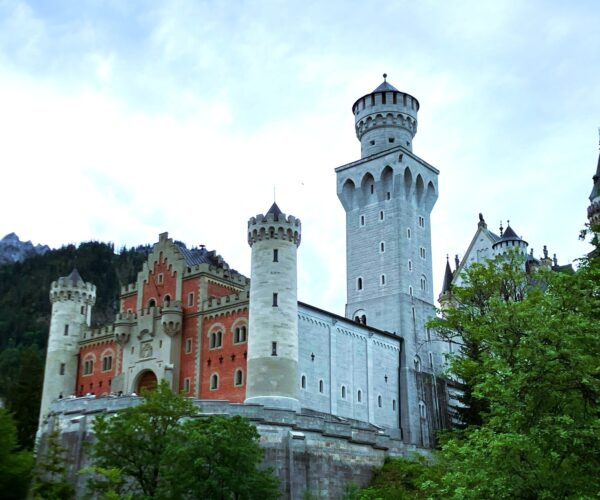
Neuschwanstein Castle, Germany © TStravelselection
2.2: The Wieskirche Pilgrimage Church
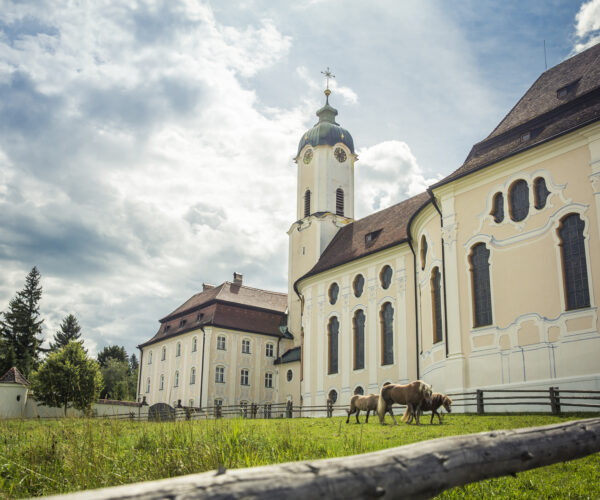
The Wieskirche, officially known as the Pilgrimage Church of Wies, is one of the most remarkable landmarks along the German Alpine Road. Set in an open meadow near Steingaden, with the Bavarian Alps rising behind it, the church appears almost unexpectedly in the landscape. It was built between 1745 and 1754 by the brothers Johann Baptist and Dominikus Zimmermann and is considered one of the world’s finest Rococo churches. The story begins in 1738, when a local farmer noticed what appeared to be tears on a figure of the Scourged Saviour. News of the event spread quickly and pilgrims began arriving from across Bavaria.
A small wooden chapel was built in 1740, but it soon became too small, leading to the construction of the Wieskirche we see today. In 1983, the Wieskirche was inscribed as a UNESCO World Heritage Site, recognised for its extraordinary Rococo architecture. Today, it continues to attract pilgrims as well as visitors from around the world. Its peaceful setting, surrounded by meadows with the Alps beyond, is very much part of the experience.
2.3: Ettal and Benediktbeuern Abbeys
Bavaria’s abbeys are an important part of the cultural landscape along the German Alpine Road, with Ettal Abbey and Benediktbeuern Abbey among the most impressive. Ettal Abbey is one of the cultural highlights along the German Alpine Road, set in a spectacular Alpine valley near Oberammergau and Linderhof Palace. Ettal Monastery has shaped the region since 1330 and remains a living Benedictine community, as well as a centre for spirituality, culture and encounters. Visitors can explore its historic buildings, discover the monastery’s long history or simply experience the tranquillity of a place that has remained an important part of Bavarian life for almost 700 years. Together with Benediktbeuern, one of Bavaria’s oldest monasteries, they offer a glimpse into the region’s religious heritage and the continuing role these historic communities play in the landscape today.
2.4: Linderhof Palace
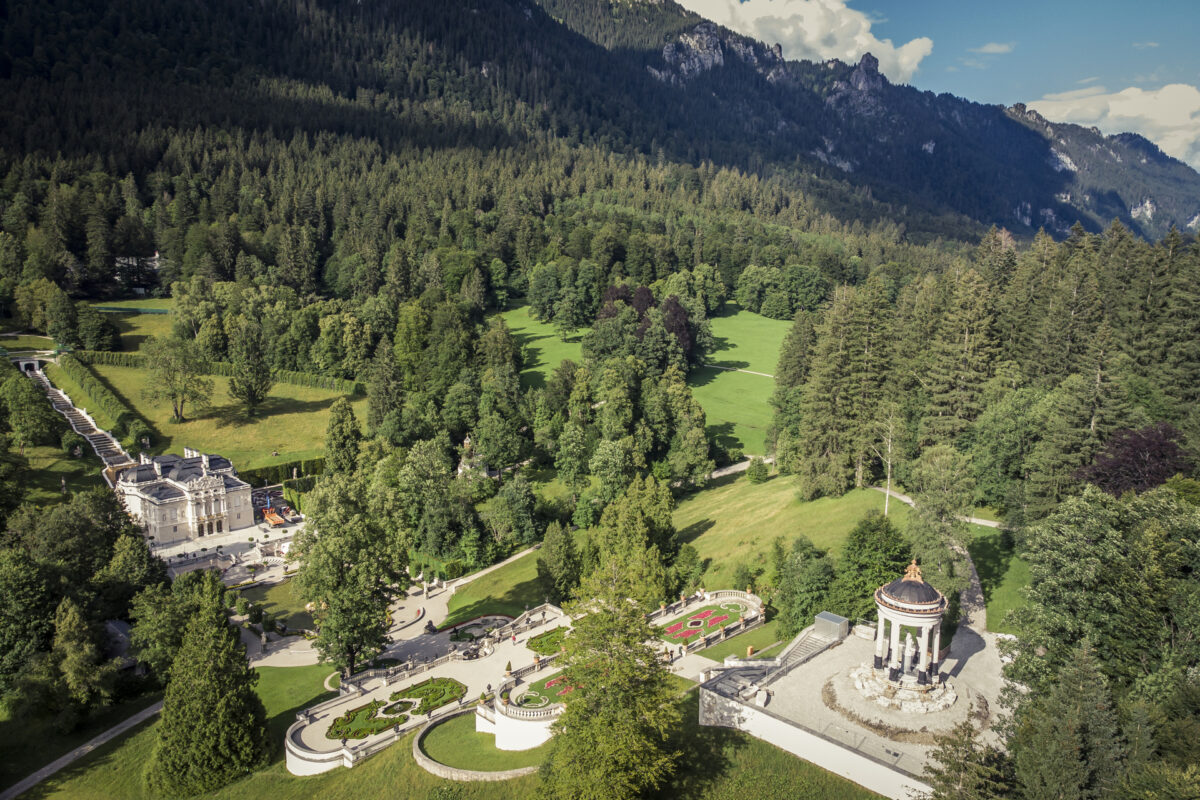
Linderhof Palace is one of the highlights of the German Alpine Road and the smallest of King Ludwig II of Bavaria’s three palaces. Set within an elaborate park, the palace and gardens form one of the most diverse and artistic ensembles of the 19th century. Linderhof is particularly significant as the only palace that Ludwig II completed. Known as his “Royal Villa”, it was strongly influenced by French architecture, taking inspiration from the small pleasure palaces that were commonly set within French gardens during the 18th century. Surrounded by parkland and the Bavarian Alps, Linderhof offers a fascinating glimpse into Ludwig II’s distinctive world and is a beautiful stop when travelling along the German Alpine Road.
3: Alpine Meadows, Mountain Peaks and Sparkling Lakes
The landscape is, of course, the great constant along the German Alpine Road. From the gentle meadows of the Allgäu to the dramatic peaks of the Bavarian Alps, the scenery changes continually as the road winds eastwards. Mountain pastures dotted with traditional farmhouses give way to forested slopes, rugged summits and valleys, while dozens of clear Alpine lakes appear along the route, their waters reflecting the mountains and changing with the light. Places such as Lake Constance, Tegernsee, Lake Chiemsee and Königssee each have their own character, from broad waters surrounded by rolling countryside to deep mountain lakes framed by steep cliffs. It is this combination of open meadows, dramatic peaks and sparkling water that gives the German Alpine Road its unmistakable sense of place and makes the journey itself as rewarding as the destinations along the way.
3.1: Zugspitze Region, Mount Zugspitze and the Karwendel Alps
The Zugspitze region is one of the most spectacular areas along the German Alpine Road, where dramatic mountain scenery meets traditional Bavarian villages and Alpine valleys. Rising to 2,962 metres, the Zugspitze is Germany’s highest mountain, offering spectacular panoramic views across the Bavarian Alps. Nearby, the Karwendel Alps provide another impressive mountain backdrop, with rugged limestone peaks, deep valleys and pristine Alpine landscapes. From Mittenwald, the Karwendel Cable Car takes visitors high above the town to the Karwendel mountain, where a viewing platform offers sweeping views across the surrounding peaks and valleys. Together, the Zugspitze and Karwendel Alps showcase the dramatic beauty of the Bavarian Alps and make this region a particularly memorable part of the German Alpine Road.
3.2: Lake Chiemsee – “Bavarian Sea”
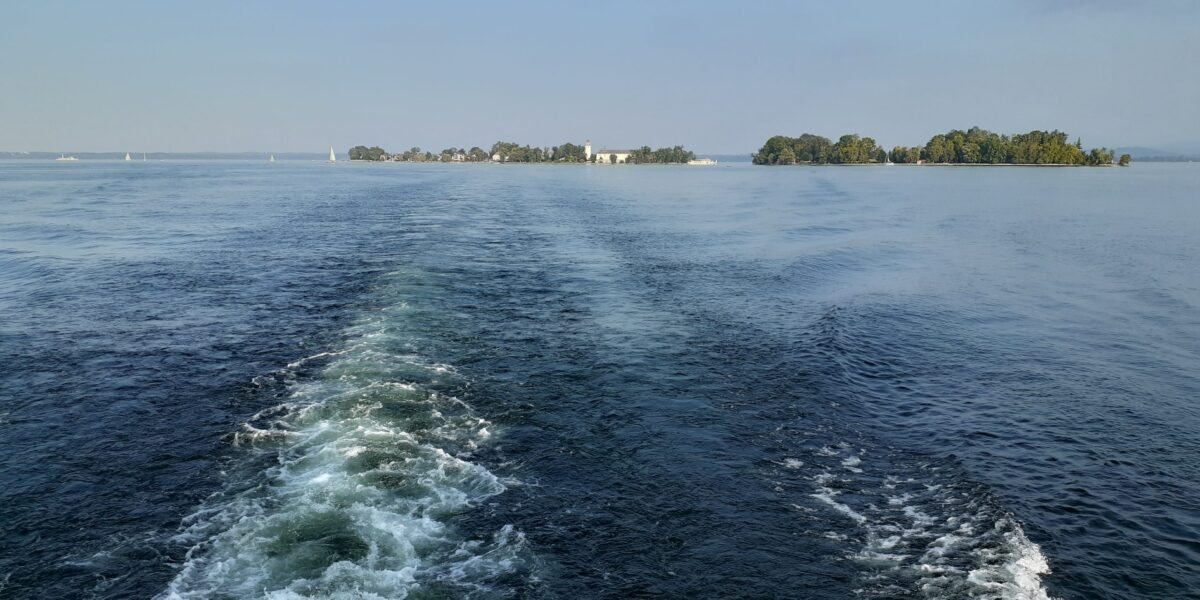
The Chiemsee, Bavaria’s largest lake, lies against the dramatic backdrop of the Chiemgau Alps and is one of the highlights of the German Alpine Road. Known as the “Bavarian Sea”, it combines spectacular Alpine views with charming islands, historic sites and traditional Bavarian experiences. A boat trip to Herreninsel offers the chance to visit King Ludwig II’s magnificent Herrenchiemsee Palace, inspired by Versailles, while the peaceful Fraueninsel is home to a historic Benedictine convent and a wonderfully relaxed island atmosphere. With lakeside villages, boat cruises, local specialities and beautiful scenery, the Chiemsee is a perfect place to slow down and enjoy the Bavarian landscape.
4: Bavarian Traditions
The German Alpine Road is as much a journey through Bavarian culture as it is through spectacular scenery. Along the route, centuries-old traditions remain part of everyday life, from mountain farming and cattle drives to local food, village festivals and traditional beer gardens.
4.1: Traditional Farming Villages
The traditional farming villages of Bavaria are an important part of the landscape along the German Alpine Road. For centuries, life in the Bavarian Alps was shaped by agriculture, with farmers keeping cattle, making hay and working the mountain meadows. Many villages still retain their distinctive character, with timber-framed or painted houses, flower-filled balconies, church towers and farmhouses set against the mountains. While life has changed considerably, these communities continue to preserve many of the traditions, architecture and rhythms that give the Bavarian Alps their unmistakable character.
4.2: Viehscheid Cattle Drive
One of the most colourful Bavarian traditions takes place at the end of the Alpine summer, when cattle are brought down from the mountain pastures in the annual Viehscheid. After spending the summer grazing on the high Alpine meadows, the decorated cattle are driven back to their home villages, where farmers and local communities gather to welcome them. The animals are traditionally adorned with elaborate headpieces, flowers and bells, and their return is celebrated with food, music and local festivities. The Viehscheid is more than a spectacle for visitors; it remains an important part of the agricultural calendar and a living expression of Bavarian Alpine culture.
4.3: Beer Gardens
Few Bavarian traditions are as enjoyable for visitors as the beer garden. Traditionally found beneath shady chestnut trees, Bavarian beer gardens are places to sit, eat, drink and spend time together, often in an atmosphere that feels remarkably relaxed. The tradition dates back centuries, when breweries stored beer in underground cellars and planted trees above them to keep the ground cool. Today, beer gardens can be found throughout Bavaria, from traditional village inns to picturesque lakeside and Alpine settings. They often serve local beers alongside Bavarian specialities such as pork knuckle, brotzeit, pretzels, sausages and Obatzda. After a day of exploring the German Alpine Road, there are few better ways to unwind than settling into a traditional Bavarian beer garden and enjoying the scenery, local food and relaxed atmosphere.
4.4: Allgäu Cheese
The Alpine meadows of the Allgäu are closely connected with one of Bavaria’s most distinctive culinary traditions: cheese making. The region has a long history of cheese production, with evidence dating back to Roman times and historical records from the 12th century documenting Alpkäse made in Alpine dairies. Swiss cheesemaking expertise later influenced the region’s dairy industry, which flourished during the 19th century, and by 1852 the Allgäu was regarded as Germany’s leading cheese-producing region. Today, the region is particularly known for Allgäuer Bergkäse, a traditional mountain cheese made from the milk of cattle grazing on rich Alpine pastures. Many small dairies and mountain huts continue to produce cheese using traditional methods, connecting local food directly with the Alpine landscape. Allgäuer Bergkäse is also a key ingredient in Allgäuer Kässpatzen, a beloved local speciality of freshly made Spätzle combined with melted cheese and topped with plenty of golden-brown fried onions – a delicious taste of the Allgäu’s Alpine farming heritage.
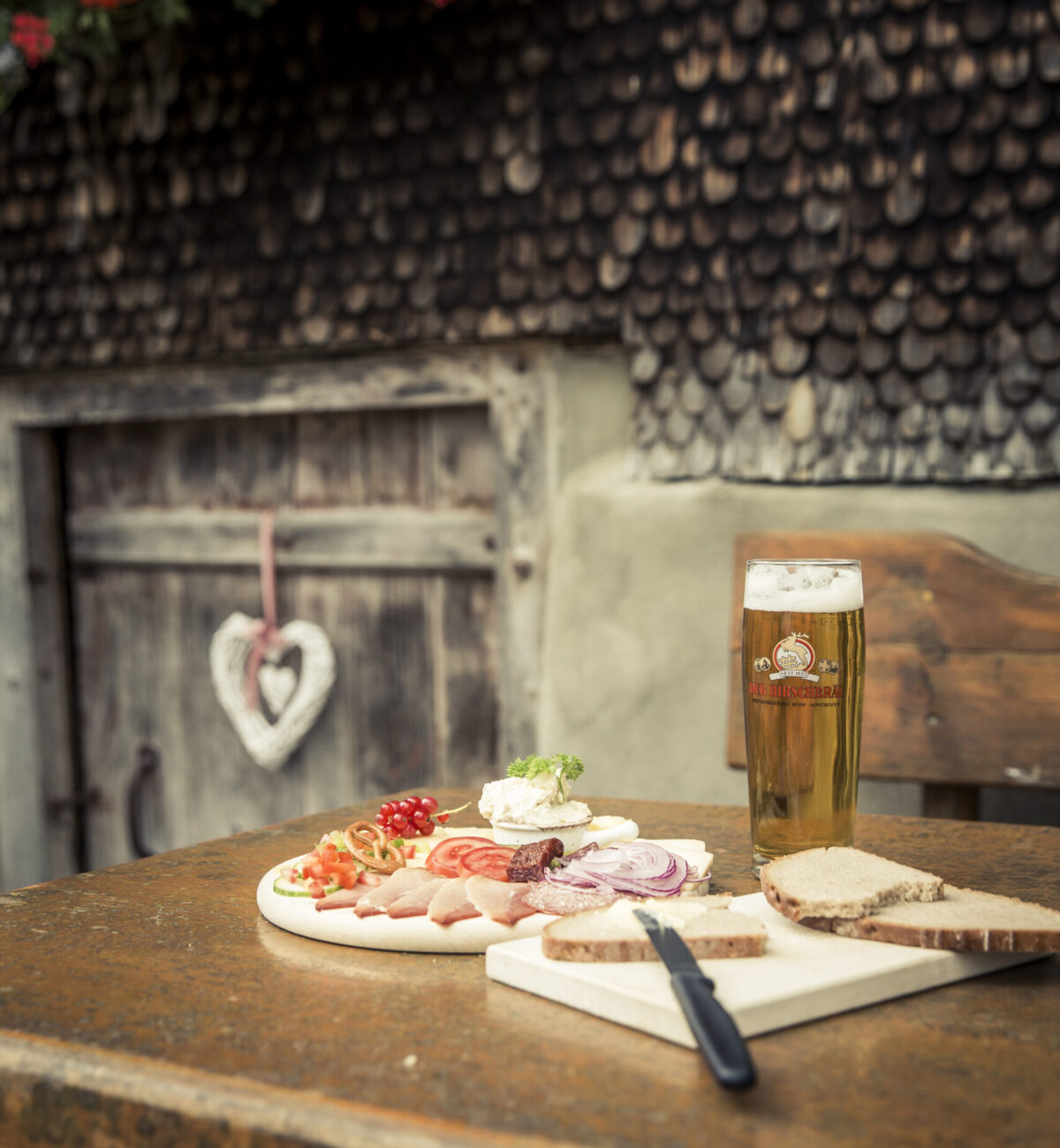
Traditional Bavarian Brotzeit © erlebe.bayern – Bernhard Huber
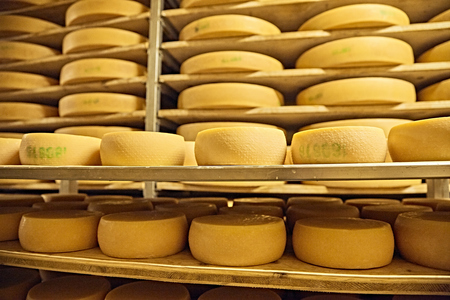
Allgäu Cheese © erlebe.bayern – Gert Krautbauer
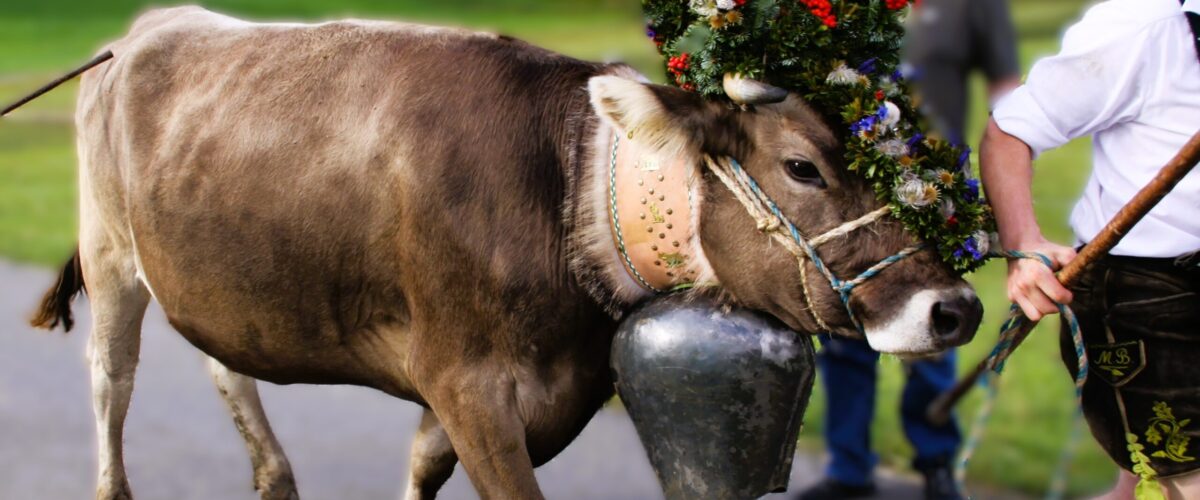
Allgäuer Viehscheid (Almabtrieb) – traditionally decorated cattle return from the Alpine pastures to their home villages at the end of the summer season.
The Journey Is Part of the Holiday
The German Alpine Road is not simply about reaching the next destination, the journey itself is part of the experience. Rather than rushing from one attraction to the next, take the time to follow the road through Bavaria’s changing landscapes, from shimmering Alpine lakes and green meadows to mountain villages, historic castles and dramatic peaks. The freedom of a road trip allows you to stop when a view catches your eye, linger over a long Bavarian lunch or take an unplanned detour to discover somewhere unexpected. Whether you drive the entire route or choose a few of its most scenic sections, the German Alpine Road invites you to slow down and enjoy the journey as much as the destinations along the way.
.
Ready to Experience The German Alpine Road?
Get your guide: “3 Costly Trip Planning Mistakes (and How to Avoid Them)” and learn how to plan your journey the smart way – avoiding common pitfalls, saving money and time. We share practical ideas and easy-to-implement strategies to help you avoid common trip planning mistakes and create a Central European journey that truly reflects your travel style and interests.

FREQUENTLY ASKED QUESTIONS ABOUT VISITING THE GERMAN ALPINE ROAD
Can I combine the German Alpine Road with Munich, Austria or Switzerland?
Absolutely. The route works particularly well as part of a longer Central European itinerary. You can combine the German Alpine Road with Munich, Salzburg, Innsbruck, Austria or Switzerland, depending on the wider journey. This makes it easy to experience the Bavarian Alps as part of a tailor-made European holiday rather than as a standalone road trip.
How long does it take to drive the German Alpine Road?
The official German Alpine Road recommends allowing five to nine days to experience the entire route. Rather than simply driving from start to finish, it is worth allowing time for sightseeing, walks, scenic stops and local experiences along the way.
Do I need to drive the entire German Alpine Road?
Not at all. The route can be experienced in sections, allowing you to choose the landscapes, towns and attractions that best suit your interests.
Is it better to self-drive the German Alpine Road or travel with a private driver-guide?
Both options offer a wonderful way to experience the German Alpine Road. The right choice depends on how you prefer to travel. Self-driving gives you complete freedom to set your own pace, stop whenever you wish and explore independently. For Australian travellers, it is worth remembering that Germany drives on the right-hand side of the road, which can take some adjustment if you are accustomed to driving on the left. A private driver-guide, however, allows you to relax and enjoy the scenery without navigating, while benefiting from local knowledge, personal recommendations and a deeper understanding of the region’s history, culture and traditions.
Planning the German Alpine Road from Australia?
Dreaming of exploring the German Alpine Road and the Bavarian Alps? Let us help you turn your ideas into a private, tailor-made journey designed around you.
We warmly invite you to discover the German Alpine Road in a way that goes beyond the usual highlights – through its mountain villages, Alpine landscapes, historic castles, local traditions and authentic Bavarian experiences. With our personal, locally rooted approach, we design your private German Alpine Road journey with care and first-hand knowledge. Every route, every stop and every experience is chosen around you, so your journey feels natural, unhurried and genuinely personal, rather than simply following a map.
Take the first step today: schedule a personal call with us, request your tailored German Alpine Road itinerary, or simply reach out with your questions. Let us shape your very own journey through Bavaria, from the spectacular Bavarian Alps and fairytale castles to traditional villages, local flavours and unforgettable Alpine experiences.
Private, tailor-made journeys to Germany, Austria, Switzerland & Liechtenstein. Europe . Your Way .